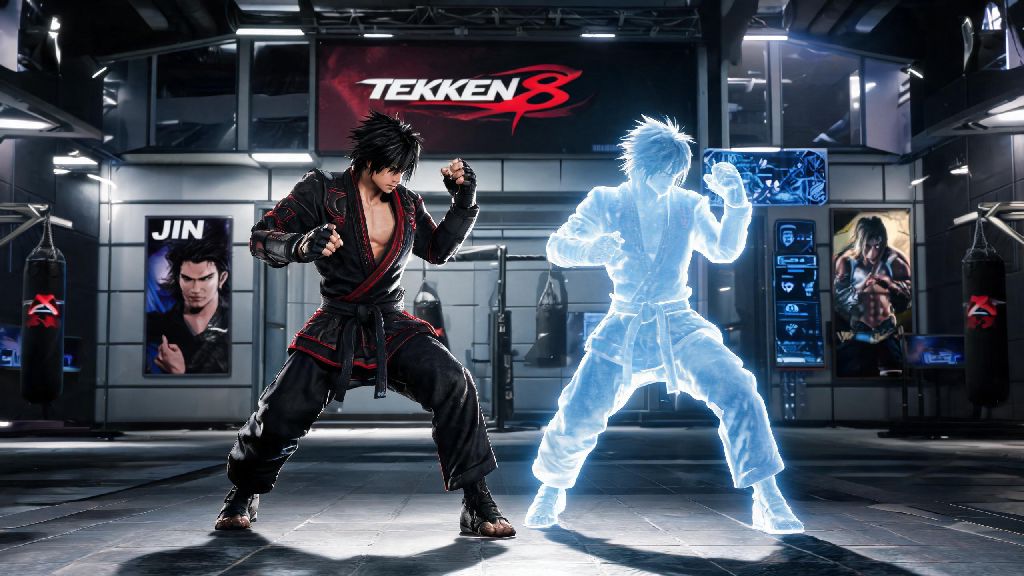
If you’ve ever spent 20 minutes spamming your best combos in training mode only to choke the second you hit ranked, you’ve probably heard other players recommend fighting your own ghost. I started testing this tactic last year after I hit a wall at Fujin rank, and I can say without a doubt that learning how to fight your own ghost in Tekken 8 is one of the most underrated practice methods you can use. The ghost system creates a perfect copy of your playstyle, from your go-to combo routes to the stupid sidestep habit you keep forgetting you have, so every match feels like you’re fighting the exact version of yourself that loses matches you should win. You don’t have to deal with random spam from random opponents, or worry about someone picking a character you hate just to tilt you. It’s just you, your flaws, and a chance to fix them without wasting ranked points.
What Happens When You Fight Your Own Ghost in Tekken 8?
Tekken 8’s ghost AI is way more advanced than past entries in the franchise. It doesn’t just copy your move list—it tracks your decision making over dozens of matches, so it knows you always press 1+2 after a blocked low, or that you always backdash twice when you’re at plus frames on block. I was shocked the first time I fought my own ghost, because it did the exact stupid unsafe wakeup kick I use when I panic, and then punished me for it the same way my ranked opponents do. Your ghost will have all your strengths too, so don’t expect an easy fight even if you’re fighting a copy of yourself.
Many players assume the ghost only copies obvious moves, but it also picks up on tiny, unconscious habits you don’t even notice. It will mimic the way you mash throws when you’re at plus 3 on block, or your tendency to jump back when you see a string you don’t recognize. That’s what makes this mode so much more useful than fighting standard CPU opponents. Standard CPU is programmed to follow rigid, predictable patterns that don’t reflect real player behavior, but your ghost has your patterns, which are the exact ones holding you back from ranking up.
You don’t have to do anything special to generate your own ghost, either. Just play 20 to 30 standard matches, either ranked or casual, and the game will automatically build a profile of your playstyle. You can access it any time from the custom battle menu under the ghost battle tab, and select your own profile as the opponent.
Step-by-Step Prep Before Your First Ghost Battle
Most players jump straight into ghost battles without any prep, and then wonder why the practice doesn’t translate to real ranked wins. Small adjustments to your settings and setup will make every second you spend fighting your ghost way more effective. You don’t need any fancy tools, just a few tweaks to your standard practice setup.
Pick the exact character you main for all your practice matches against your ghost—don’t switch to a secondary, because the whole point is to fix the flaws in your main’s playstyle. I made this mistake my first week testing ghost battles, fighting my Jin main ghost with a random Claudio pick, and none of the punishes I practiced worked when I switched back to Jin for ranked.
You also want to make sure you’re in the right headspace before you start. This isn’t a mode where you’re trying to style on opponents or show off fancy combos. You’re here to find your flaws, so you will lose rounds, and you will feel silly when your own bad habits are used against you. That’s the point, so don’t get tilted over it.
Pro Tactics to Beat Your Own Ghost Consistently
Your first few matches against your ghost will feel weird, because it knows every trick you usually use to catch opponents off guard. If you usually open rounds with a jumping kick, your ghost will already be blocking it before you even press the button. That’s why you can’t play like you normally do if you want to win.
The first thing you want to do is exploit the bad habits you know you have. For example, if you know you always press a high punch when you’re at minus 2 on block, throw a low against your ghost every time it’s in that situation. It’ll fall for it almost every single time, because that’s what you do. I used to always sidestep left when I was pressured, so I started pressuring my ghost and then throwing a right tracking move every time, and I got a free combo almost every round.
Shake up your playstyle completely for the first few rounds too. If you usually play super aggressive, slow down and play defensive. If you usually rely on lows to open opponents up, focus on pressure and throws instead. The ghost is programmed to counter your usual playstyle, so it won’t know how to react when you deviate from your normal patterns. I won my first full set against my ghost by switching from my usual rushdown play to a slow, defensive style, and it had no idea how to break through my blocks.
Pay extra attention to every punish you land on your ghost, because that’s exactly what your opponents are doing to you in ranked. If you land a full combo on your ghost every time it throws that unsafe EWGF you love to spam, that means every other player you face is doing the exact same thing to you. Write that habit down immediately, so you remember to fix it later. I stopped using my favorite unsafe pressure string entirely after I noticed my ghost got punished for it 8 times in one set, and my win rate jumped 7% the next week.
How to Turn Ghost Battle Wins Into Real Ranked Progress
Beating your ghost a few times doesn’t mean you’re suddenly a better player. The real work comes after the matches, when you take what you learned and apply it to your regular play. A lot of players stop at just winning the set, and never actually fix the flaws they spotted, so they don’t see any improvement in ranked.
Don’t just stop once you beat your ghost 3 times in a row. First, go back and watch the replays of your matches, and make a short list of every bad habit you spotted. Keep that list somewhere you can see it before you queue for ranked, like a note on your phone or a sticky note on your monitor. I have a note on my phone that lists 3 bad habits I found from fighting my ghost: mashing wakeup kicks, sidestepping left under pressure, and throwing unsafe lows when I’m ahead. I look at that note every time I queue for ranked, and it has saved me from dozens of stupid losses.
You also want to update your ghost regularly, at least once every two weeks or every time you rank up. As you fix your old bad habits, you’ll pick up new ones, so your old ghost won’t be accurate anymore. I update mine after every 30 ranked matches, so it always reflects my current playstyle, and I always have new flaws to fix. Don’t fall into the trap of fighting the same outdated ghost for months, because you’ll just be practicing against a version of yourself that doesn’t exist anymore.
You don’t have to spend hours every week on ghost battles either. Even 20 minutes a week, one or two sets, is enough to spot flaws you’ve been missing for months. I still fit in one set against my ghost every Sunday, even after I hit Tekken King rank, because it always finds a tiny new habit I didn’t know I had.
At the end of the day, learning how to fight your own ghost in Tekken 8 isn’t about winning a few practice matches. It’s about getting honest feedback on your playstyle without spending hours scrolling through replay after replay, or getting tilted by random opponents who play nothing like you. It’s the closest you’ll get to playing against yourself, and that’s the fastest way to fix the small mistakes that cost you ranked wins. Give it a try next time you’re stuck in a rank slump, and you’ll be shocked at how much you learn about your own play in just a few rounds.